Photograph everything today, walk the yard for what the hail hit, don't get on the roof, don't sign with the first truck in the driveway, and get a free inspection before you decide whether to call your insurer.
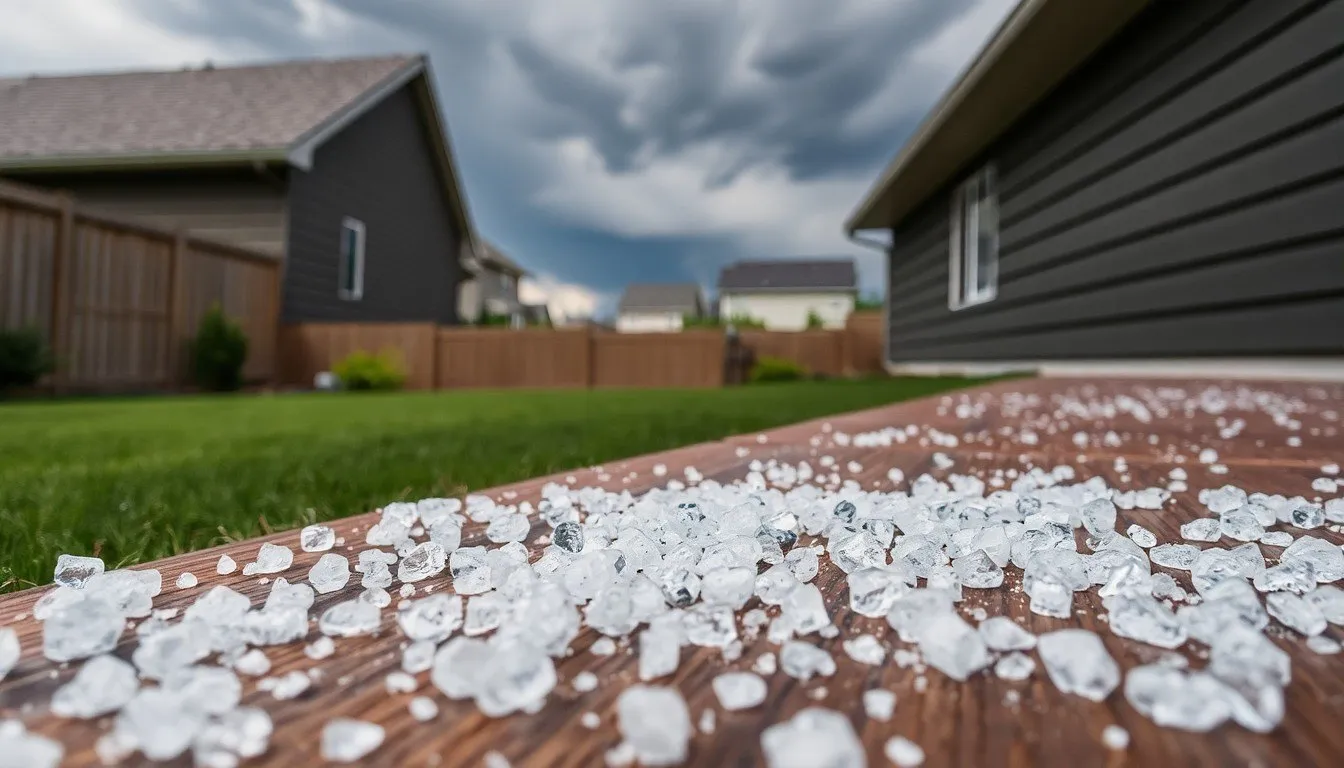
Hail on the Wasatch Front comes off the mountain fast and is over in fifteen minutes. What you do in the next two days matters more than what you do in the next two months. Here’s the order.
Take photos while the evidence is fresh. The hail itself, if it’s still on the ground, next to something for scale. Dents in the gutters, the downspouts, the AC unit’s fins, the mailbox, the car. Granules washed into the driveway or piled at the downspout. Any shingles or pieces of shingle in the yard.
You are not documenting for yourself. You’re documenting for an adjuster who will read these in three weeks and needs to believe the storm was real and hit your house. Phone photos carry a date. Take more than you think you need.
Look up from the yard. Missing shingles, lifted edges, a vent cap that’s bent. Look at the neighbors’ roofs too, because damage on the street is evidence for your claim. Then stop. Do not get on the roof. Wet shingles after a storm are one of the most common ways homeowners get hurt, and nothing you find up there today changes what happens next.
Move what’s underneath, catch what you can, photograph the damage inside, and call a roofer for a tarp. Insurers generally expect you to prevent further damage, and the receipt for emergency weatherproofing usually goes on the claim. Our emergency page has the ten-minute checklist.
This is the step most people get backwards. A hail claim is a claim for damage, and you don’t know whether you have damage until someone gets on the roof and looks. Hail bruises on asphalt shingles are soft, dark spots where the granules were knocked loose; they’re hard to see from the ground and easy to feel by hand. A roof can look fine from the driveway and be totaled, or look rough and be fine.
A free inspection gives you photos and a straight answer. If there’s no damage, you’ve saved yourself a claim on your record. If there is, you file with evidence already in hand.
After a big hail event, out-of-state crews show up in Davis County driveways within days. Some are fine. Some are the reason “storm chaser” is a phrase. Three things to check before you sign anything:
We wrote the full list in how to choose a roofer. Hold every roofer to it, including us.
If the inspection found real damage, call your carrier and open the claim. Have the inspection photos ready and describe the storm date and what was found. Ask what your wind and hail deductible is; many Utah policies now carry a separate one, sometimes a percentage of the home’s insured value, and it changes the math.
If the inspection found nothing, don’t file. Keep the photos and the inspection report in a folder. If a leak shows up next spring, you have a dated record of what the roof looked like after the storm.
When the claim is open, we meet the adjuster on the roof, walk every area we documented, and write the scope so nothing gets left out. Here’s how the whole claim runs. And if it turns out the roof needs work regardless of the claim, we’ll tell you that honestly, with the photos to show why.
The inspection is free, and we photograph everything we find.